
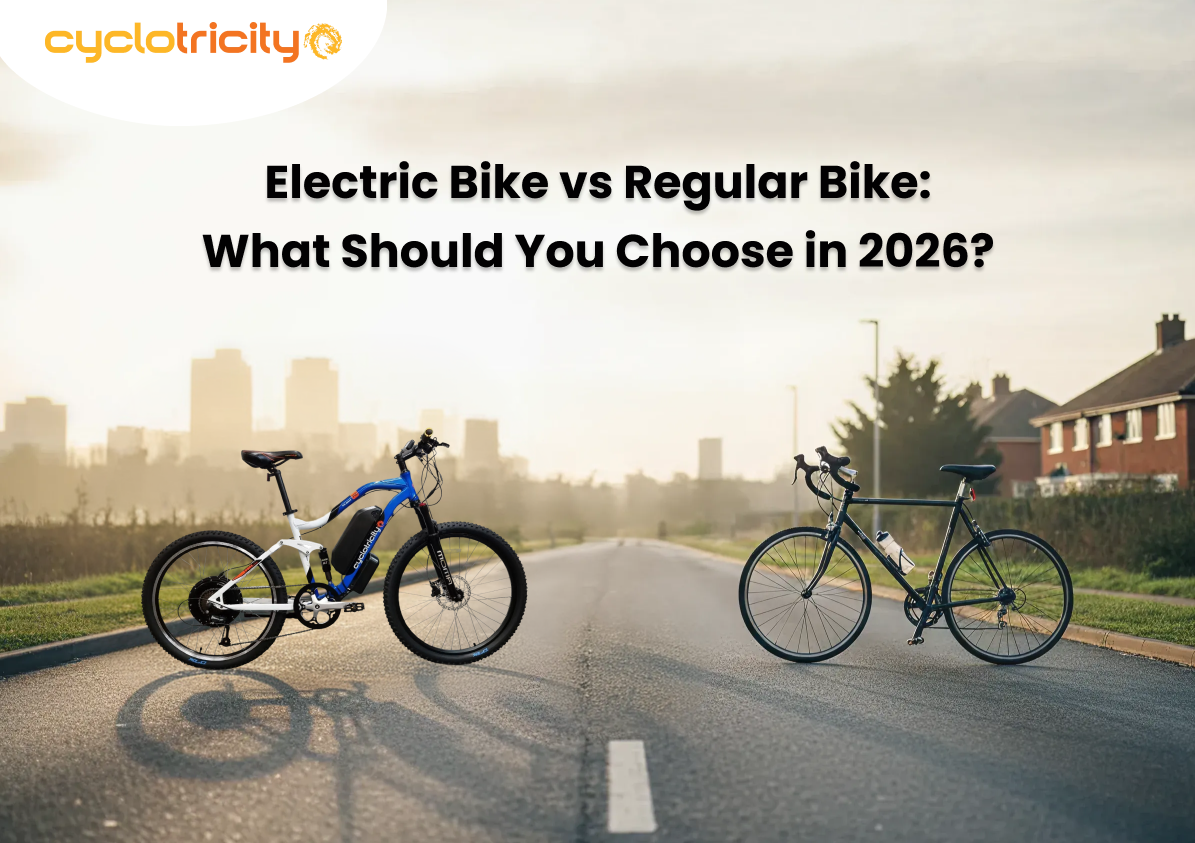
Electric Bike vs Regular Bike: What Should You Choose in 2026?
In 2026, cycling has become one of the most practical ways to move around UK cities. With traffic congestion increasing, fuel costs remaining high, and sustainability influencing everyday decisions, many riders are now choosing between two clear options: an electric bike or a regular pedal bike. Each offers a different riding experience, and the right choice depends on your daily travel needs, fitness level, and budget. At Cyclotricity, we help riders navigate modern cycling choices with clarity. Whether you are commuting through busy streets, riding longer distances, or upgrading your current bike, this guide will help you decide whether a lightweight electric bike or a traditional bicycle is the better fit for your lifestyle.
What Is a Regular Bike?
A regular bike is a traditional cycle powered only by your pedalling. It has no motor or battery, making it lightweight, simple, and easy to maintain. Regular bikes are ideal for fitness, short-distance travel, and riders who want full control over their speed and effort. They are affordable and perfect for flat routes or casual rides.
What Is an E-Bike?
An electric bike (e-bike) is a bike that has an electric motor and battery and provides pedal assistance. With this, you can ride faster, uphill can be done easily, and you can go farther with less work. E-bikes are the choice of commuters who are looking for a comfortable, non-sweaty trip and of anyone who wants riding to be easier. There are a few riders, however, that decide to use an Electric Mountain Bike for extra power on rough terrains.
E-Bike vs Regular Bike: Side-by-Side Comparison:
|
Feature |
Regular Bike |
Electric Bike |
|
Cost |
Low initial cost |
Higher upfront cost |
|
Maintenance |
Low maintenance |
Moderate maintenance (battery + motor) |
|
Speed |
Depends on rider fitness |
Higher and consistent speed with motor support |
|
Power Source |
Fully pedal-powered |
Pedal assist from motor and battery |
|
Effort Required |
High effort, especially on hills |
Low-effort, smoother and easier rides |
|
Comfort Level |
Good for short rides |
Very comfortable for daily travel |
|
Ideal For |
Fitness, short trips, flat routes |
Commuting, long rides, hilly routes |
Cost:
Regular bikes have a low initial cost, making them ideal for beginners or casual riders. There are no battery or motor expenses, which keeps the price affordable. Electric bikes, however, require a higher upfront investment because of their advanced components. But over time, e-bikes save money on fuel, parking, and commuting costs, especially when choosing a Lightweight Electric Bike for daily use.
Maintenance:
Normal bikes require minimal maintenance only, such as checking the tyres, lubricating the chain, and adjusting the brakes. Their uncomplicated design makes fixes inexpensive and easy. Electrically assisted bikes require maintenance to a certain extent since they come with a battery and a motor system. Yet if they are taken good care of, the operational costs will still be low and can be handled by daily commuters without any problem.
Speed:
The speed of a regular bike depends completely on your fitness level and pedalling power. Uphill or long routes can be challenging and slow. E-bikes offer higher and more consistent speeds thanks to motor support. This helps you commute faster, especially on busy UK roads or long-distance trips.
Power Source:
Regular bikes are fully pedal-powered, which is great for fitness but tiring for long or hilly rides. E-bikes use pedal assist from a motor and battery, making cycling smoother and far more efficient. This is a major reason many UK commuters are switching to an electric model.
Effort Required:
Riding a regular bike requires more physical effort, especially when dealing with hills or strong winds. This is great for exercise but not ideal for daily travel. E-bikes reduce effort significantly, making them suitable for people of all ages, including those who want comfortable and easy commuting.
Comfort Level:
Regular bikes are comfortable for short or casual rides but can feel tiring during long-distance travel. Riders may arrive sweaty or exhausted. E-bikes provide excellent comfort because pedal assist reduces pressure on your legs. This makes it perfect for daily commuting or long weekend rides.
Ideal For:
Regular bikes work best for fitness-focused riders, short distances, and flat routes. They are simple, lightweight, and easy to maintain. E-bikes are ideal for commuting, long-distance travel, hilly areas, and older riders. If you want less effort but more speed, an e-bike from Cyclotricity is the smarter choice.
Why Choose an E-Bike?
An e-bike is the perfect choice in 2026 if you want fast, easy, and comfortable travel. It helps you cover long distances without getting tired and makes city commuting far more efficient. Whether it’s for work, weekend rides, or exploring new routes, E-bikes offer excellent value. With rising public transport costs and fuel prices, they’re a cost-effective, eco-friendly alternative. Many riders also prefer them for their performance on hills and mixed terrains.
Recommended E-Bike Kits from Cyclotricity:
Cyclotricity provides a range of premium Ebike Conversion Kit options that allow you to upgrade your existing bicycle without buying a brand-new electric bike. These kits offer excellent performance and reliability; you need power for commuting, adventure riding, or long-distance travel.
250W E-Bike Conversion Kit | Front Hub Motor Kit:
A front-wheel motor kit is one of the most suitable choices for amateurs, occasional riders, and UK commuters. It has very smooth assistance to pedalling, is easy to install, and is totally compliant with road regulations. It is ideal for riding on flat routes and daily transportation without investing in a new bike.
250W/500W E-Bike Conversion Kit | Rear Drive eKit:
The rear-drive kit gives better traction and stability, especially when the routes are longer or uneven. The strong push coming from the rear wheel gives a very natural riding feel with an electric boost added to it. The 250W option will be useful for daily commuting, while the 500W one will be the best for off-road performance and adventure cycling.
250W E-Bike Conversion Kit | Mid-Drive eKit:
A mid-drive kit is for those riders who need strong climbing power and a balanced performance. It is placed right at the centre of the bike, where it produces quick acceleration and great hill support. This is one of the main reasons for its popularity in off-road trails, steep routes, and Electric Mountain Bike setups.
Battery Options:
Cyclotricity produces lightweight but tough lithium-ion batteries that have a very good range for daily commuting. These batteries are offered in two types: rack-mounted and frame-mounted, both giving advanced and very reliable power, which makes every ride efficient and smooth going.
Conclusion:
In 2026, the decision between an electric bike and a regular bike will depend on what you plan to do with them and your daily schedule. A regular bike comes with simplicity and a low price; however, electric bikes save effort, provide the user with lots of power, and make the whole commuting process easier and more comfortable. With Cyclotricity, every bike can be easily turned into an e-bike, and thus, you will reap all the rewards of electric-powered biking. Both alternatives, however, are healthy, eco-friendly, and pleasant modes of transport, no matter which one you choose.
Frequently Asked Questions
Most e-bike batteries take 4–6 hours to fully charge. Fast chargers can reduce this time. It’s recommended to avoid draining the battery completely, as partial charging helps extend overall battery life.
Yes, most e-bike batteries are removable. This makes charging easier; just bring the battery inside. It also helps prevent theft and keeps the battery safe in cold weather.
Yes, you can ride an e-bike without using the motor. Simply turn off the power and pedal normally, just like a regular bicycle, but the battery and engine may make it feel significantly heavier.
No, e-bikes are not harder to maintain. The basic upkeep is the same as a regular bike; just keep the battery charged and get the motor checked occasionally for smooth performance.
Yes, conversion kits are perfect if you already own a bicycle you love. They are affordable, easy to install, and give you the same power and performance as many ready-made e-bikes. Cyclotricity kits are especially popular because they are powerful, UK-assembled, and budget-friendly.