
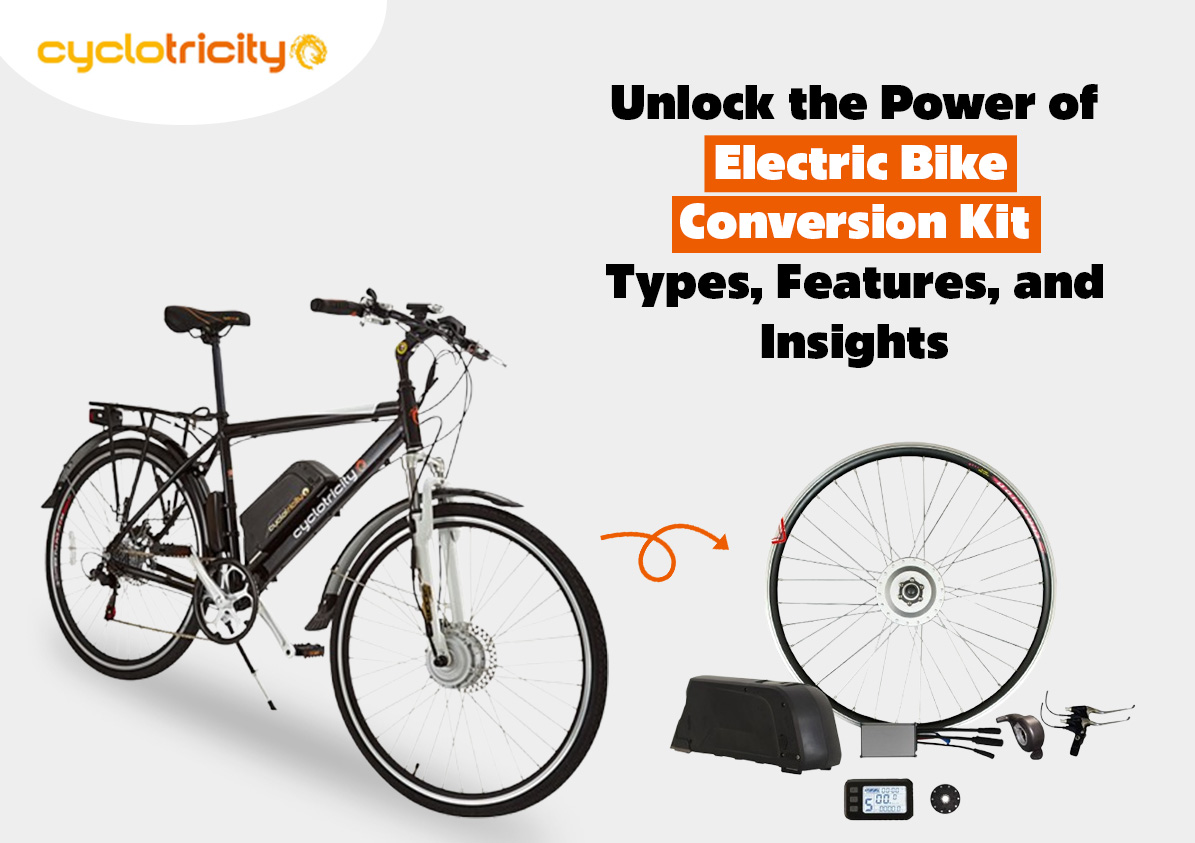
Unlock the Power of Electric Bike Conversion Kits: Types, Features, and Insights
Electric bikes have become incredibly popular because of their effectiveness, environmental friendliness, and capacity to enhance commutes and riding experiences. But it can be expensive to buy a new electric bike. Electric bike conversion kits come in handy here. These kits can be used to turn your current bike into an electric one at a far lower cost. This comprehensive guide will discuss the advantages of using conversion kits, important factors, and the top choices currently available.
Why Choose an Electric Bike Conversion Kit?
By choosing an electric bike conversion kit, you may modify your existing bike with electric power for less money than buying a brand-new e-bike. It allows you to maintain your favorite bike while improving your way of life, extending your range, and personalizing your riding style. Cyclotricity offers reliable and high-quality conversion kits that make it easy to transform your bike into an efficient e-bike, giving you the best of both worlds—affordability and performance.
Types of Electric Bike Conversion Kits:
There are three main categories of e-bike conversion kits. Each has unique types and operates quite differently:
Your bike's front wheel has been swapped out for one with an electric motor integrated into the hub. The motor pulls you along by spinning the front wheel when it is turned on. This is often the most affordable and easiest to install, but it can affect steering and handling slightly. This might not be ideal for very hilly terrain.
Similar to the front-wheel kit, the motor is integrated into the rear wheel. This kit propels you from behind. It provides a more natural "pushing" sensation, better for tackling hills, but the installation can be a bit more complex than that of front-wheel kits.
These substitute your bike's bottom bracket, which holds the cranks and pedals, with a device that houses a motor. The motor can right away help you peddle your bike due to its gears. The most seamless integration and comfortable riding experience on difficult terrain are provided by this kit. Nevertheless, this is the priciest and frequently the most difficult to install.
Key Features to Consider When Choosing a Conversion Kit:
- Motor Power:
Typically, motors may generate 250W to 1000W or more of power. A 250W motor is perfect for traveling or light riding. For heavy-duty or off-road riding bikes, higher power kits are a great choice.
- Battery Compatibility:
Make sure the kit's battery has enough range for your needs. Since different kits include or do not include a battery, choose one based on your car's requirements.
- Installation Ease:
Several kits are simpler to install than the others. If you’re new to DIY projects, opt for a simpler front-wheel or rear-wheel kit.
- Control System:
Conversion kits come with different control systems such as throttles, pedal assist sensors (PAS),, or both. Select between throttle control, which allows you to manually activate the motor, and PAS, which provides motor assistance as you pedal.
Conclusion:
An electric bike conversion kit is a versatile, affordable, and eco-friendly way to turn your conventional bike into an e-bike. Whether you're a commuter who wants to go faster or a bike rider who wants more power for high climbs, there is a conversion kit to meet your needs. Browse Cyclotricity's large selection of electric bike conversion kits to find the best option for your e-bike adventures.
Frequently Asked Questions
There are three main types of conversion kits: front wheel kits where the motor is in the front wheel, rear wheel kits where the motor is in the back wheel, and mid-drive kits where the motor replaces the bottom bracket and works through the bike’s gears. Each has different advantages in ease of installation, handling, and performance.
Conversion kit motors vary in power, commonly from 250 watts up to 1000 watts or more. A 250 watt motor is usually suitable for everyday riding and legal on most roads, while higher wattages help with stronger acceleration and steeper climbs.
The battery determines how far you can ride on one charge and how much power you get overall. It’s important to choose a battery that matches your intended range and riding style because some kits do not include one and need a compatible battery.
Conversion kits often use throttle control, pedal assist sensors that add power automatically as you pedal, or both. Pedal assist systems help create a more natural riding experience, while throttles give instant power on demand.
Yes, conversion kits can benefit many riders from commuters wanting easier rides to enthusiasts seeking more power. Choosing the right type of kit depends on your terrain, distance needs, and comfort with installation.