E-bikes are fast becoming the choice of commuters, fitness enthusiasts, and environmentally conscious riders across the UK. One of the greatest problems faced by a rider new to e-bikes is whether to choose pedal assist (PAS) or throttle control.
Both make better riding experiences, but they do so in different ways and are better suited to different types of riders. Knowing these differences can ensure you make a good choice for your needs. Here, we shall go through how each system is used, their pros and cons, which legal requirements in the UK apply to you, and which one could be the better choice for you. Cyclotricity specialises in high-quality e-bike kits that are convertible with both PAS and throttle options so your bike can be tailored to perfectly suit your riding style.
What is Pedal Assist (PAS)?
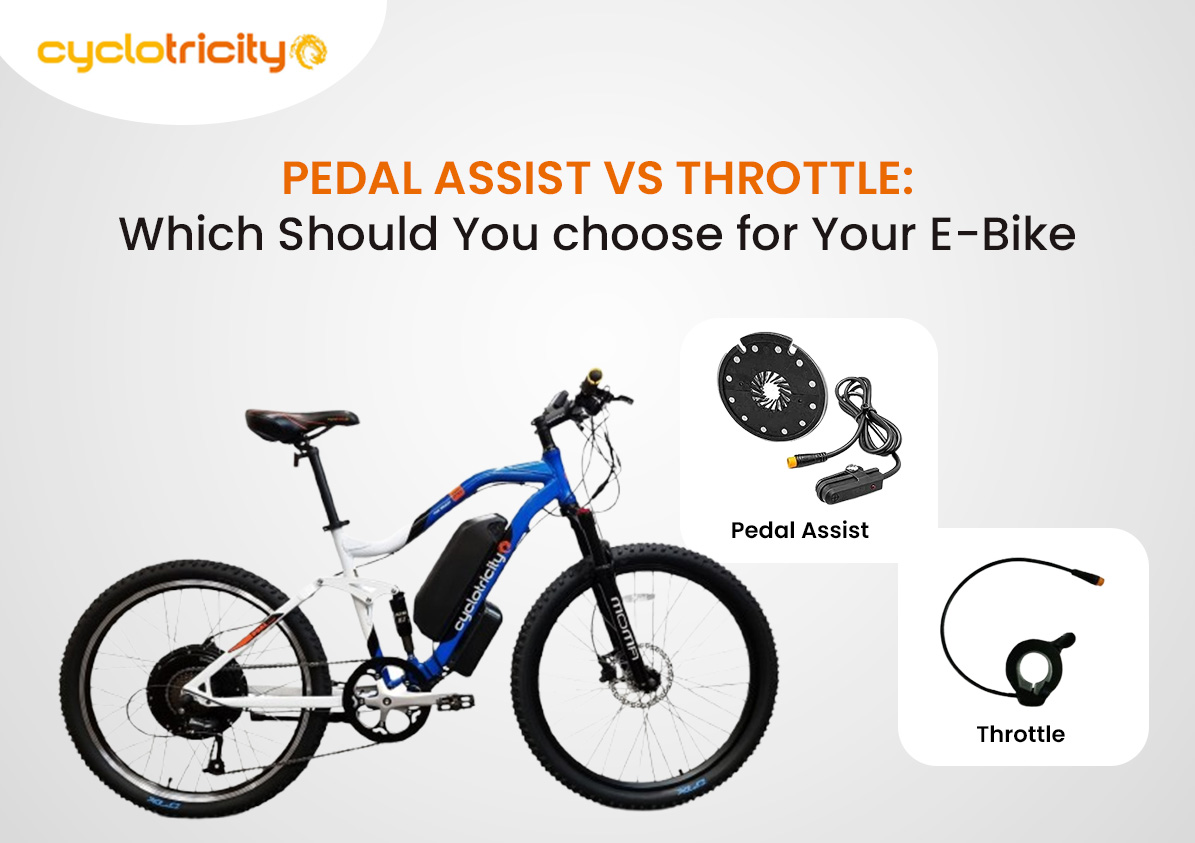
Pedal Assist or PAS is a mode of exerting motor support on the bike as it is being pedalled. Sensors on the crank or wheel pick up the motion and transmit a signal to the motor, so you receive a smooth push at every rotation. It feels just like a normal bike, except that some power is provided to make hills, commutes, or longer rides achievable with ease.
Pros of Pedal Assist (PAS):
- An authentic cycling feel that makes it a good choice for riders that want more support uphill and on long rides.
- PAS makes better use of battery power, as the motor will only assist when the rider pedals, therefore increasing the range of the bike.
- Fully legal in the UK and EU, requiring no licence, tax, or insurance, making it hassle-free for commuters.
Cons of Pedal Assist (PAS):
- If no pedalling is being done, unlike the motor throttle system, there will be no assistance with PAS.
- Many times, it can feel slower than controlling through the throttle, especially when it begins on a full brake or in heavy traffic.
- The low immediate power on the hills, while it helps with climbing, PAS depends on your pedalling input, so it can feel less powerful for very steep hills without extra effort.
What is a Throttle E-Bike?
Throttle electric bicycles are instantaneously created and work like a bike in the sense that they work by twisting the handle or pressing a thumb lever to get the bike moving by motor power; no pedalling is needed. Riding on this bike is easy, which makes it well-suited for people who want extra support over hard terrain rather than comfort seekers, just for those with lazy riding styles.
Pros of Throttle E-Bike:
- Effortless riding lets you cruise without pedalling, making it ideal for those who want a completely relaxed and easy journey.
- Great for steep climbs, as the motor gives instant power, helping you tackle hills smoothly when you’re tired or low on energy.
- Comfort-focused design is best for riders who prefer convenience and minimal physical effort, whether for commuting or leisure rides.
Cons of Throttle E-Bike:
- High battery consumption happens because the motor does all the work, draining the battery faster than would have been the case with the pedal assist.
- It does take away from the natural pedalling motion, so it is perhaps not for the pedaller; this option may not appeal to someone seeking the experience of pedalling while riding.
- In the UK, there is a legal restriction that prevents full-throttle e-bikes from exceeding 6 km/h unless they are registered as mopeds with the required licence and insurance.
Pedal Assist vs Throttle: Side-by-Side Comparison:
|
Feature |
Pedal Assist (PAS) |
Throttle E-Bike |
|
How It Works |
Motor assists while one is pedalling. The more effort is put in by the rider, the more the motor will assist. |
Motor activates immediately the moment the twist grip or a thumb lever is pressed; you are not required to pedal at this stage. |
|
Comfort |
Feels like regular cycling with some ease added; maintain the exercise element. |
For comfortable or energy-saving rides, bike-like comfort. |
|
Speed Control |
The speed is more consistent and natural, controlled by your pedalling rhythm. |
The speed is immediate and responsive, controlled directly through the throttle. |
|
Fitness Benefits |
Encouraging pedalling, improving fitness by reducing stress. |
Minimum physical activity; hence, fitness benefits are limited. |
|
Cost & Availability |
The conversion kit is widely available and generally affordable. |
Limiting availability, can spend slightly more and can withstand legal restrictions. |
Expert Tips for Choosing Between the Two:
- Consider your riding style – PAS suits fitness-orientated riders, while throttle is best for effortless cruising.
- Think about your daily commute - It works well for the movement of distance; a short throttle is easy for stop-start trips.
- Evaluate terrain - PAS is better on flat roads; The throttle gives additional power on hills or in heavy traffic.
- Battery and range are needs - The batteries from the fuel expand life, and the throttle increases it rapidly for drains and is ideal for small rides.
- Comfort vs. exercise - PAS provides light exercise; throttle offers maximum comfort with no effort.
- These kits are fully compliant with UK e-bike regulations, making them perfect for everyday riders who want peace of mind.
- They make ideal battery life extenders and smoother pedalling support for commuters, fitness enthusiasts, and long rides.
- Riders can enjoy a natural cycling experience while still getting motor assistance when needed.
- Designed for riders who prefer instant power without pedalling, making them great for relaxed city cruising or short trips.
- They offer flexibility; you can switch between pedal assist and throttle depending on your mood or ride.
- Legal Note: In the UK, throttles that power the bike above 6 km/h without pedalling require DVLA registration, insurance, and a licence. Always check local regulations before purchase.
Recommended Kits from Cyclotricity:
PAS E-Bike Conversion Kits (Best for Compliance & Commuting):
Throttle-Compatible Kits (Best for Extra Flexibility):
Conclusion:
Selection between pedal assist (PAS) and throttle e-bikes comes down to your lifestyle, ride preferences and local rules. If you feel a natural cycling, after better battery efficiency and full UK compliance, PAS is the smart option for rights, fitness enthusiasts and long-distance riders. On the other hand, if you give importance to spontaneous cruises, hill climbing power and maximum comfort, a throttle system can appeal, although it comes with legal restrictions in the UK. At the end of the day, both systems increase your riding experience in different ways. With Cyclotricity versatile e-bike conversion kit, the good news is that you need not compromise; you choose the arrangement that satisfies your needs, plus the benefits from both systems.
Frequently Asked Questions:
1. Which type is better for long-distance rides?
Pedal Assist is usually better for long rides since it saves battery power and gives a natural cycling feel while still reducing strain.
2. Are throttle e-bikes legal in the UK?
Yes, but with restrictions—full throttle e-bikes can only go up to 6 km/h without pedalling unless registered as a moped with DVLA, insurance, and a licence.
3. Does pedal assist give a workout?
Yes, PAS still requires pedalling, so it provides light exercise and fitness benefits while reducing strain on joints and muscles.
4. Can I have both pedal assist and throttle on the same e-bike?
Yes, many conversion kits, like those from Cyclotricity, offer both options so you can switch depending on your riding style.
5. Which option drains the battery faster, PAS or throttle?
Throttle drains the battery quicker since the motor does all the work, while PAS is more energy-efficient as it only supports when you pedal.